Stainless Steel 304 Round Bar
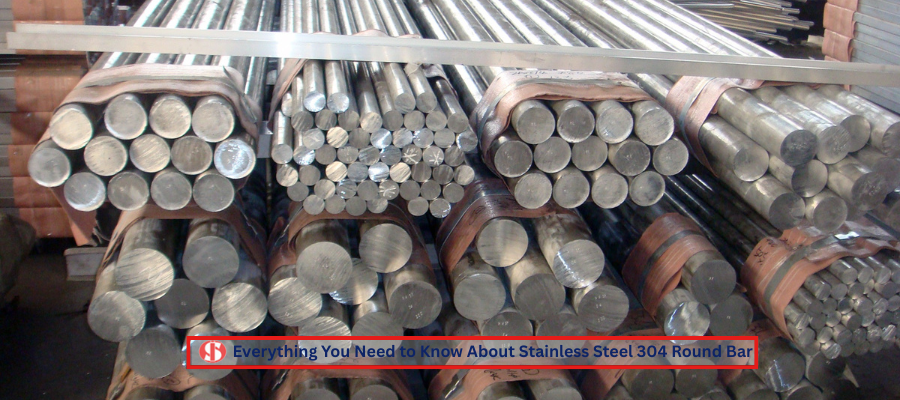
Among the various metal forms, a stainless steel 304 round bar is one of the most commonly utilized in modern manufacturing. The material is an austenitic stainless steel alloy that has approximately 18% chromium, and 8% nickel. This combination gives it excellent strength, durability, and corrosion resistance. Its ability to endure oxidation and chemical exposure makes it a top choice across engineering, construction, and fabrication industries. These bars come in different diameters, finishes, and lengths to suit different needs. Common standards like ASTM A276 and ASTM A479 regulate their composition and performance, ensuring reliable quality for global users. Whether used in machinery, support frameworks, or marine fittings, stainless steel 304 round bars are known for their reliability, ease of use, and cost-effectiveness.
Key Properties of Stainless Steel 304 Round Bar
Stainless steel 304 is valued because it balances performance, affordability and versatility. Here are its key properties that make it valuable across industries:
- Excellent corrosion resistance: 304 resists rusting and tarnishing in varied environments, including moisture and mild chemicals.
- High strength: It has a tensile strength of around 515 MPa and a yield strength of about 205 MPa, offering good load-bearing capacity.
- Good hardness: Suitable for heavy-duty applications without deforming easily.
- Superior ductility and formability: It bends and shapes easily, which helps in welding and machining.
- Non-magnetic in annealed condition: It stays mostly non-magnetic when annealed but can become slightly magnetic after cold working.
- Excellent oxidation resistance: Performs well under high temperatures, maintaining strength and appearance.
These features make 304 suitable for all kinds of fabrication and mechanical uses, where both strength and resistance to wear are essential.
Manufacturing Process of Stainless Steel 304 Round Bar
A high-quality stainless steel 304 round bar goes through several carefully controlled steps during production. Each stage ensures performance and consistency.
- Raw Material Selection: Pure stainless steel 304 billets, made with the right balance of chromium and nickel, are chosen as starting material.
- Melting and Casting: The billets are melted in electric arc or induction furnaces. The molten metal is then cast into solid billets or ingots under controlled conditions.
- Hot Rolling or Forging: These billets are heated and rolled or forged into round shapes. Controlling the temperature and speed makes sure that the grain structure and surface finish are consistent throughout.
- Heat Treatment: The rolled bars are annealed to reduce internal stress, improve ductility, and enhance corrosion resistance.
- Surface Finishing: Bars can be supplied with polished, bright, or black finishes, depending on end-use requirements.
- Inspection and Testing: Rigorous quality checks are done at every stage. This includes tensile strength tests, hardness tests, dimensional verification, and surface inspection based on ASTM standards.
Each phase ensures that the bar meets international quality norms and provides long service life in demanding conditions.
Industrial Applications of Stainless Steel 304 Round Bars
The versatility of stainless steel 304 round bars makes them essential across many industries. Below are some major uses:
- Construction: Used in structural frameworks, columns, and support beams. It is ideal for outdoor and long-term use, as it is strong and doesn’t rust. It also helps reduce the frequency of maintenance that needs to be done in places with a lot of humidity or pollution.
- Food and Beverage Industry: It is preferred for food processing equipment, storage tanks, and piping systems that demand high hygiene. The alloy doesn’t react with food or liquids. It has a smooth finish that makes it easy to clean and meets strict sanitary standards.
- Chemical and Petrochemical Plants: Performs reliably in corrosive environments with exposure to acids and chlorides. It maintains strength even under high pressure and fluctuating temperatures.
- Marine Industry: It can handle being in saltwater which reduces the risk of rust and oxidation in coastal and offshore areas. Because it doesn’t pit or scale it will work well for a long time in wet conditions.
- Automotive and Aerospace: Common in shafts, bolts, and engine parts that demand both strength and lightweight performance. Its ability to retain integrity under vibration and load makes it ideal for dynamic systems.
- General Engineering: It is used to make tools, fixtures and machine parts that need to be exact and last a long time. It can be used for custom machining on different mechanical designs because it is so flexible.
Advantages of Using Stainless Steel 304 Round Bars
There are several reasons why stainless steel 304 round bars remain a top choice for manufacturers and engineers:
- High corrosion and heat resistance: Handles exposure to moisture, chemicals, and high temperatures without losing strength.
- Long service life: Maintains structural integrity with minimal maintenance, even under heavy use.
- Cost-effective: More affordable than many other stainless grades yet offers excellent performance.
- Strong yet lightweight: Offers strength comparable to carbon steels but with reduced weight for easier handling.
- Easy fabrication: It can be easily cut, welded and polished to the required shapes and finishes.
- Environmentally friendly: It can be recycled completely which reduces waste and supports eco-friendly manufacturing. As it is strong, easily available, and easy to use, it is widely used around the world.
Comparison – Stainless Steel 304 vs 316 Round Bar
Many buyers compare stainless steel 304 and 316 grades before purchasing. Here are the key differences to help with selection:
- Composition: 316 has molybdenum in it making it ideal to resist chloride attacks and pitting. Adding molybdenum to 316 makes it better for harsh and salty conditions.
- Corrosion Resistance: 316 performs better in harsh marine and chemical environments while 304 handles general corrosion effectively. In everyday surroundings, 304 provides more than enough protection at a lower cost.
- Cost: 304 is inexpensive and works for most industrial uses where corrosion isn’t a major concern. The difference in price depends on how much metal is in the item, and how much demand there is for it around the world.
- Applications: 304 is used in food processing, construction, and the automotive sectors. For areas like marine, chemical processing and medical equipment where corrosion is a major concern, 316 is the first choice. It is also frequently selected as the material for equipment that will be in contact with saltwater or acids.
Stainless steel 304 round bars offer a blend of performance, durability, and usability that few materials can match. From food plants to shipyards their reliability makes them an industry standard for engineering and fabrication work. Choosing the right manufacturer is important in ensuring quality and compliance with ASTM standards. For consistent supply, verified testing and expert guidance, working with a trusted steel supplier ensures value and peace of mind.
To learn more or request a quote get in touch with a reputed stainless steel round bar manufacturer or supplier today.
Related Posts