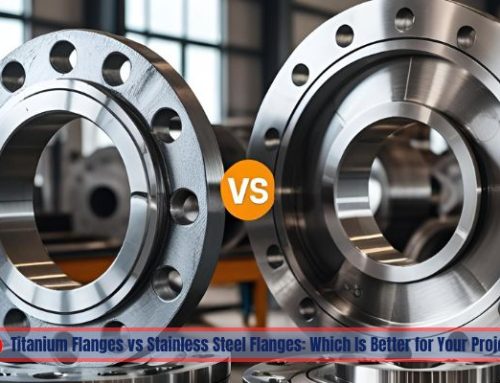

In the world of industrial piping and mechanical systems, the flange is one of the most essential components. Simply put, a flange is a connector that allows pipes, valves, pumps, and other equipment to be joined together in a piping network. By providing both strength and accessibility, flanges ensure easy assembly, maintenance, and inspection of complex piping systems. They are designed to withstand extreme pressure and temperature while preventing leakage of fluids or gases, making them vital for industrial safety and efficiency. Flanges also allow for system flexibility since they make it possible to dismantle sections of piping without cutting them apart. Their benefits include strength, leak-proofing, ease of maintenance, and versatility in applications across industries. Different types of flanges are developed to suit specific requirements, such as high-pressure operation, temporary systems, or flow measurement.
What is a Flange?
From a technical perspective, a flange is a rim-like mechanical component designed to connect pipes, fittings, valves, and equipment securely within piping systems. Two flanges are typically bolted together with a gasket in between to ensure a leak-proof seal, allowing the controlled flow of liquids, gases, or chemicals.
A flange consists of the following critical parts:
- Hub: The central elevated section that provides structural strength and helps distribute stress uniformly when pressure is applied.
- Face: This is the surface area where two flanges are brought into contact, usually requiring a gasket to create a sealed joint.
- Bolt Holes: Precisely drilled holes across the flange that allow bolts to pass through and secure two flange faces together.
- Ring: Serves as the rim of the flange, giving it stability and reinforcement.
Flanges can be constructed from a variety of materials depending on their application, including stainless steel flanges (corrosion resistance), carbon steel (strength and cost-effectiveness), alloy steel (high-temperature tolerance), and cast iron (durability in moderate use).
Since piping systems operate under varying international conditions, adherence to standards is crucial. Flanges are manufactured as per global standards such as ANSI (American National Standards Institute), ASME (American Society of Mechanical Engineers), DIN (German standards), EN (European Norms), JIS (Japanese Industrial Standards), and BS (British Standards). These ensure uniformity, safety, compatibility, and interchangeability of flanges across industries worldwide.
Uses and Applications of Flanges
Flanges find application across nearly every industrial sector due to their reliability and functionality.
- Oil & Gas Industry: Used in offshore rigs, oil refineries, gas distribution pipelines, and processing units where high pressure and extreme environments demand reliable connections.
- Petrochemical Plants: Critical for transporting chemicals and hydrocarbons safely without leakage, and for managing high-temperature, corrosive environments.
- Waterworks: Used in water distribution systems, treatment plants, and municipal pipelines to allow easy maintenance and replacement of sections.
- Power Generation Plants: Essential in steam systems, boilers, and cooling water loops where both high pressure and high temperature are present.
- Shipbuilding and Marine Applications: Used on ships and marine vessels where piping must endure salty water corrosion and varying mechanical stresses.
- Maintenance & Repair: Flanges allow pipelines to be dismantled without cutting, which facilitates quick inspection, repair, cleaning, and modifications.
- High-Pressure & High-Temperature Environments: Flanges are engineered to remain reliable in demanding environments where welded joints may not be practical.
Major Types of Flanges
1. Weld Neck Flange
A weld neck flange is designed with a long, tapered hub that gradually transitions to the pipe wall thickness. This feature distributes stress evenly between the flange and the pipe, reducing the risk of failure under repeated pressure or temperature variations. Its butt-weld connection makes it particularly strong and durable.
- Best Used In: High-pressure and high-temperature applications such as petroleum refineries, chemical plants, and power plants, where reliability and safety are critical.
- Key Advantage: Provides leak-proof and stable connections, reduces stress concentration, and stands up well under vibration and bending conditions.
2. Slip-On Flange
A slip-on flange is simply slipped over the end of the pipe and then welded on the inside and outside for strength. It requires less accuracy in cutting the pipe length and is easier to align compared to a weld neck flange.
- Best Used In: Low-pressure applications, such as water distribution systems, cooling systems, and temporary piping setups.
- Key Advantage: Cost-effective and simple to install, though it is less durable under high-pressure or high-stress conditions.
3. Socket Weld Flange
A socket weld flange has a recessed socket into which the pipe is inserted before being fillet welded around the outside. It is primarily used for small-diameter pipes carrying high-pressure fluids.
- Best Used In: Chemical industries, pharmaceutical applications, and hydraulic systems where strong, leak-proof joints are necessary.
- Key Advantage: Provides smooth flow with minimal turbulence, making it ideal for sensitive fluid or gas transportation.
4. Blind Flange
A blind flange is a solid flange used to block off the end of a pipe, vessel, or valve. Since it has no bore, it completely seals the pipe. It may also be used temporarily for tasks like pressure testing or isolating a particular section of a pipeline.
- Best Used In: Pipeline ends, pressure testing of flow rates, or when a system needs isolation during maintenance.
- Key Advantage: Provides easy sealing and reopening for extension or repairs without cutting the pipe.
5. Lap Joint Flange
A lap joint flange is used with a stub end fitting, allowing the flange to rotate around the pipe. This makes alignment of bolt holes easy, even after welding. Since the stub end carries the actual stress, lap joint flanges are often lighter and can even be made of cheaper materials.
- Best Used In: Systems requiring frequent dismantling, inspection, or adjustments, such as food, pharmaceutical, and beverage processing lines.
- Key Advantage: Excellent for applications involving frequent cleaning, inspection, and modifications.
6. Threaded Flange
A threaded flange has internal threads that screw onto matching external threads on a pipe, eliminating the need for welding. This feature makes it ideal for projects where welding is difficult or not allowed.
- Best Used In: Low-pressure applications such as water, compressed air systems, and in flammable environments where welding poses a hazard.
- Key Advantage: Easy to install and remove, perfect for small diameter piping systems exposed to limited stress.
7. Orifice Flange
An orifice flange is made with holes to accommodate orifice plates or meters, which are used for measuring flow rates in pipelines. Typically, they also come with pressure tap connections.
- Best Used In: Process control industries, chemical plants, or water treatment facilities where flow measurement is essential.
- Key Advantage: Enables accurate monitoring and regulation of fluid or gas flow within a piping system.
8. Ring Type Joint (RTJ) Flange
A ring type joint flange has a machined groove into which a metallic ring gasket is inserted, creating a strong metal-to-metal seal when the flanges are bolted together.
- Best Used In: Oil & gas industries, refineries, and chemical plants where high-pressure, high-temperature conditions exist.
- Key Advantage: Extremely leak-proof, reliable under severe service conditions, and suitable for harsh environments.
Flange Facing Types
- Raised Face (RF):
This is the most common facing in flanges and features a small raised area around the bore where the gasket sits. By concentrating the compressive force, it increases the efficiency of the seal between flanges.- Applications: Oil, chemical, and power plant systems handling medium- to high-pressure fluids.
- Flat Face (FF):
The entire surface is flat, allowing full contact with the gasket. Commonly used for flanges made from cast iron or fiberglass piping, where flexibility is important.- Applications: Water treatment, low-pressure piping systems, and non-critical services.
- Ring Type Joint (RTJ):
Uses a metallic gasket that fits into a machined groove. This ensures a highly secure metal-to-metal seal ideal for severe conditions.- Applications: Extremely high-pressure and high-temperature systems, including petrochemical plants, oil refineries, and offshore platforms.
Choosing the Right Flange
When choosing a flange, several critical factors need to be evaluated to ensure system safety and efficiency:
- Pressure Rating: Flanges are classified into pressure classes (Class 150, 300, 600, 900, etc.). A higher class indicates a greater capacity to withstand high internal pressure. Choosing the wrong class can result in leakage or failure.
- Temperature Handling: Different flange materials perform differently under temperature extremes. For instance, stainless steel works better in high-heat environments, while carbon steel is most suited for general use.
- Material Compatibility: The flange material must align with the pipe material to avoid corrosion or stress-related failures. Example: stainless steel pipe with stainless steel flange maintains consistency and reduces galvanic corrosion.
- Industry Standards: Using flanges approved by ASME, ANSI, DIN, or JIS ensures compatibility, safety, and standardization for international operations.
Advantages of Using Flanges
- Ease of Maintenance and Inspection: Flanges allow specific pipeline sections to be easily dismantled without affecting the entire system, simplifying inspection, repair, and cleaning tasks.
- Strong Mechanical Connection: Flanges provide robust and durable joints that are stronger than simple threaded connections, capable of withstanding high pressure, vibration, and thermal stress.
- Versatility Across Applications: Flanges can be manufactured in diverse materials and designs, making them adaptable across a wide range of industries such as oil, gas, power generation, water treatment, and shipbuilding.
- Cost-Effective in Long-Term Operation: While initial cost may be higher than welded joints, flanges save money in the long run thanks to their reusability, ease of component replacement, and minimal downtime during repairs.
Conclusion
Flanges are indispensable in industrial piping networks, providing strength, leak resistance, versatility, and ease of maintenance. Found in industries ranging from oil & gas to pharmaceuticals, they ensure safe and efficient pipeline operations under all conditions. Selecting the appropriate type—whether a weld neck flange, slip-on flange, blind flange, threaded flange, or more specialized designs like RTJ flanges—is essential for achieving system safety, durability, and efficiency. Ultimately, flanges are the backbone of industrial piping systems, making them one of the most vital components for maintaining reliable and functional plants across industries.
Related Posts