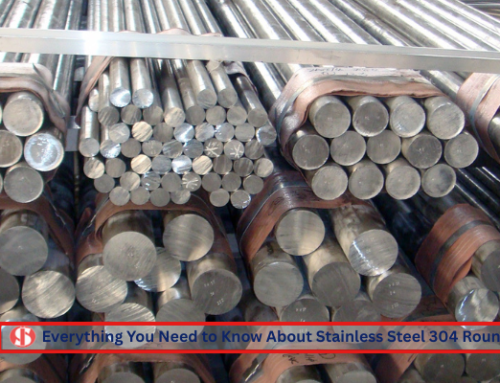

Introduction to Stainless Steel Round Bar
Stainless steel round bars are long, solid rods crafted from various stainless steel grades, typically produced through hot rolling, cold drawing, or forging processes. They are essential semifinished products, widely utilized as foundational raw material for machining, fabrication, and construction components. The circular cross-section makes them versatile for use in shafts, fasteners, valves, machine parts, and architectural features, among others.
These bars are indispensable across sectors like construction, automotive, marine, oil & gas, and food processing due to their consistent dimensional accuracy and high adaptability to forming, cutting, and joining operations.
Stainless steel is consistently preferred over carbon steels or other alloys because it demonstrates remarkable durability against mechanical wear and environmental factors. Unique to stainless steel is its tough, oxide-rich surface that resists rust, chemical attack, and staining even under severe conditions while maintaining high tensile and yield strength. This means products from these bars remain reliable for much longer periods, reducing downtime and maintenance costs.
Key Features of Stainless Steel Round Bar
Corrosion resistance in harsh environments
Stainless steel round bars form a thin, passive chromium oxide layer on their surface, acting as a shield against moisture, chemicals, acids, and oxidizing agents. This passive layer self-heals if scratched or damaged, ensuring that the material will not rust or pit in marine, chemical, or even polluted industrial atmospheres. This property is vital for offshore, pharmaceutical, and food-grade applications.
High strength-to-weight ratio
The inherent composition and crystalline structure of stainless steel offer exceptional mechanical properties: high tensile and yield strengths with relatively reduced density. This means structural elements can be lighter, optimizing load-bearing efficiency in bridges, vehicles, or aerospace engineering, and reducing overall project weight without sacrificing safety.
Excellent machinability and weldability
Modern alloying and manufacturing techniques ensure stainless steel round bars are formulated for clean, precise machining, fitting, and joining. The bars can be drilled, milled, threaded, or turned to exact dimensions with minimal tool wear and smooth operation. Welding is also straightforward, allowing for strong joints and seamless integration into complex assemblies.
Smooth surface finish for aesthetic and functional applications
Precision finishing—such as grinding, polishing, or drawing—can achieve superior surface quality. This results in round bars that not only provide minimal friction and resistance in mechanical applications (like shafts or piston rods) but also deliver visual appeal for architectural features, furniture, and decorative structures. Smooth bars inhibit bacterial growth, critical in sanitary environments.
Long service life & sustainability
Due to their resistance to environmental, chemical, and mechanical degradation, stainless steel round bars significantly outlast alternatives. Their long lifecycle translates to lower replacement rates and maintenance needs. They are also 100% recyclable, reducing the ecological impact and ensuring compliance with modern sustainability practices.
Types of Stainless Steel Round Bars
Based on Grades
SS 304 Round Bar
Stainless Steel 304 Round Bar is the most widely used austenitic stainless steel. It contains 18% chromium and 8% nickel, delivering an optimal balance between formability, corrosion resistance, and affordability. This grade is commonly found in kitchenware, architectural moldings, and piping.
SS 316 Round Bar
Enhanced with 2-3% molybdenum, SS 316 Round Bars exhibits superior resistance to chloride-induced pitting corrosion. It’s ideal for saltwater environments, chemical processing equipment, and medical instruments due to its non-reactivity and toughness.
SS 410/416 Round Bar
Grades SS 410 Round Bars and 416 are martensitic, offering high strength and moderate resistance to oxidation and corrosion. Stainless Steel 416 is known for its improved machinability. These grades are chosen for manufacturing fasteners, pump shafts, and tools where wear resistance is crucial.
Duplex & Super Duplex Round Bars
Duplex grades combine the microstructures of austenite and ferrite, resulting in bars with nearly double the yield strength of standard austenitic steels, plus outstanding resistance to stress corrosion cracking. Super Duplex (e.g., 2507) goes further, intended for the harshest pressure and corrosive applications, such as subsea pipelines and desalination plants.
Other specialized grades
Manufacturers also supply grades like 17-4 PH (precipitation hardening for high strength), 321 (with titanium for better temperature tolerance), and 347 (niobium-stabilized for intergranular corrosion resistance). These grades cater to aerospace, power generation, and thermal processing industries.
Based on Finish & Size
Bright Round Bars
Produced through cold drawing followed by solution annealing and polishing, bright bars offer very smooth surfaces and tight tolerances. These are favored for precision components and ornamental uses.
Hot Rolled / Cold Drawn Round Bars
- Hot Rolled: Bars are shaped and dimensioned at high temperatures, producing mill-finished surfaces with less precision but good mechanical properties for general construction and heavy-duty engineering.
- Cold Drawn: Further processed at room temperature for improved surface quality, dimensional accuracy, and enhanced mechanical strength. Ideal for high-precision applications.
Polished Round Bars
These undergo specialized polishing processes—ranging from matte to mirror finishes. Used mainly in decorative installations, food processing, or cleanroom environments for both functional and aesthetic benefits.
Custom cut-to-size round bars
Capability to meet client requirements regardless of length, diameter, or tolerance. Bars are custom-cut, drilled, etched, or even pre-machined as per application-specific blueprints, saving clients time and minimizing on-site modifications.
Applications of Stainless Steel Round Bar
Construction & Infrastructure (beams, supports, reinforcements)
Stainless steel round bars deliver the strength and durability needed for load-bearing supports, concrete reinforcements, A-frame structures, and exposed beams in modern architecture, especially where longevity and aesthetics are critical.
Automotive industry (engine parts, fasteners, axles)
Precision-machined bars form the basis for critical auto components. Their resistance to vibration fatigue, heat, and corrosion makes them ideal for axles, crankshafts, suspension parts, and secure fasteners.
Oil & Gas industry (pipelines, valves, offshore structures)
Round bars withstand hostile drilling environments—including salt, chemicals, and pressure—making them suitable for pipeline construction, marine risers, well-heads, and subsea equipment, where failure is not an option.
Food processing & pharmaceutical industries (hygienic equipment)
Stainless steel’s non-porous, easy-to-clean surface is essential for the manufacture of mixers, conveyors, cutting blades, and reactors—meeting strict hygiene and safety standards. The material also resists the regular sterilization procedures.
Marine applications (resistant to saltwater corrosion)
Used for propeller shafts, boat fittings, dock hardware, and submarine components, these bars maintain integrity and appearance even after prolonged submersion or exposure to salty air.
Machinery & Tools (shafts, fasteners, gears)
Machine tool manufacturers rely on stainless steel round bars to create high-strength components—cams, gears, connecting rods, and threaded rods—ensuring low friction, resilience, and long operational lifespans.
Stainless Steel Round Bar Manufacturing Process
Raw Material Selection – sourcing premium quality stainless steel billets
Sumit Impex emphasizes the acquisition of billets only from reputable steel mills known for strict quality controls and chemical conformity. Careful attention is paid to the selected alloy composition, ensuring the starting point guarantees mechanical performance and corrosion resistance.
Heating & Rolling – hot rolling or forging process
The billets are heated in controlled furnaces to precise temperatures. Rolling or forging then converts them into round bars, aligning the grain structure and eliminating internal flaws. Temperature and deformation rates are tightly monitored to prevent inclusions and ensure homogeneity.
Shaping & Drawing – cold drawing for precision size and smooth finish
After initial rolling, bars may be drawn through dies at room temperature to refine their size, surface finish, and tolerances. Cold drawing increases tensile strength, removes scale, and improves straightness, making bars suitable for applications demanding high precision.
Heat Treatment – enhancing strength and corrosion resistance
Depending on the grade, annealing or quenching processes are used to relieve stresses, homogenize microstructure, and optimize mechanical properties. The right treatment ensures each batch meets the specified hardness, ductility, and corrosion resistance.
Surface Finishing – bright/polished finishes as per client requirements
Post-heat treatment, bars undergo surface finishing processes like centerless grinding, pickling, and polishing. These remove oxidation, scale, and imperfections, achieving the desired smoothness and reflectivity.
Quality Testing & Inspection – mechanical, chemical, and dimensional testing
Rigorous inspection regimes—covering spectroscopy for chemical analysis, tensile and impact testing, ultrasonic and magnetic particle tests—guarantee conformity with order and international standards. Dimensional checks ensure correct diameter, roundness, and straightness.
Customization – supplying tailored sizes, grades, and finishes
Customers can specify dimensions, alloy grades, tolerances, and finishes. Whether for high-strength, low-magnetic, or custom-shaped bars, Sumit Impex delivers in accordance with unique architectural or engineering demands.
Advantages of Choosing Stainless Steel Round Bars from a Manufacturer
Better quality control and traceability
Direct-from-manufacturer supply means every stage—raw material melting, forming, heat treatment, and finishing—is tracked and recorded, guaranteeing origin and process transparency for every bar.
Ability to offer customization in sizes, grades, and finishes
Unlike stockists or traders with limited inventory, manufacturers can provide precise adjustments to dimension, alloy chemistry, tolerance, and even logo marking, meeting project or client-specific requirements.
Competitive pricing due to direct manufacturing
Elimination of intermediaries leads to reduced project costs. Manufacturers optimize production runs and offer volume discounts not possible through secondary distribution channels.
Faster delivery with in-house production
Manufacturing under one roof ensures real-time scheduling, prioritization for urgent orders, and seamless logistics, reducing lead times for domestic and export markets.
Strict adherence to international standards (ASTM, ASME, EN, DIN)
Certified plants employ rigorous protocols and frequent audits to guarantee compliance—an assurance required by critical infrastructure, defense, and medical projects.
Why Choose Sumit Impex as Your Stainless Steel Round Bar Manufacturer?
Sumit Impex brings decades of industry experience to every order, combining a legacy of knowledge with ongoing investments in modern, automated machines and integrated quality control systems. This expertise ensures a vast and readily available inventory of stainless steel round bars in commonly used grades and custom sizes. The robust global supply network allows Sumit Impex to serve clients quickly and efficiently on every continent, while the steadfast customer base underscores the trust and satisfaction of sectors such as construction, engineering, food, marine, and petrochemicals. Above all, Sumit Impex is defined by its rigorous quality guarantees, timely order fulfillment, and willingness to adapt to unique client challenges, helping partners grow with confidence and consistency.
How to Select the Right Stainless Steel Round Bar for Your Project?
The selection process for stainless steel round bars begins with a careful assessment of the application’s exposure to corrosive agents, temperature extremes, and load or pressure requirements, which dictate the optimal grade choice—such as 304 for general use, 316 for marine, or specialty grades for high-stress or medical environments. The required diameter, length, and surface finish (hot rolled for structural, or polished/cold drawn for hygiene or aesthetics) are then matched to design blueprints and operational needs. It is equally important to verify that the bars conform to recognized global benchmarks (ASTM, ASME, EN, DIN), ensuring safety and regulatory compliance. Project budgets must be balanced against performance, sometimes necessitating value engineering or bulk procurement for savings. Finally, the reliability and technical support of the manufacturing partner play a crucial role, providing assurance of consistent quality, timely supply, and adaptability to future project evolutions.
Conclusion
Stainless steel round bars are the backbone of modern engineering, architecture, machinery, and precision manufacturing, delivering exceptional strength, resilience, and adaptability to every finished product. With its robust manufacturing capacity and global reputation, Sumit Impex stands at the forefront as a dependable supplier of custom round bar solutions for clients across every industry. For projects where durability, precision, and trusted support matter most, reach out to Sumit Impex for high-quality, tailor-made stainless steel round bars.
Related Posts