Fasteners fail before the structures they hold together. Moisture, chlorides, process chemicals, and sustained heat can attack fasteners in harsh service. A seized or cracked bolt can take an entire assembly out of service. Stainless steel resists that attack through a self-repairing chromium oxide film, but the grades behave differently from each other. Selecting the right grade for the service environment determines how well a fastener performs over its service life.
What Types of Fasteners Offer Corrosion Resistance?
Two broad options dominate: corrosion-resistant alloys and coated fasteners.
Stainless Steel Fasteners for Industrial and Outdoor Applications
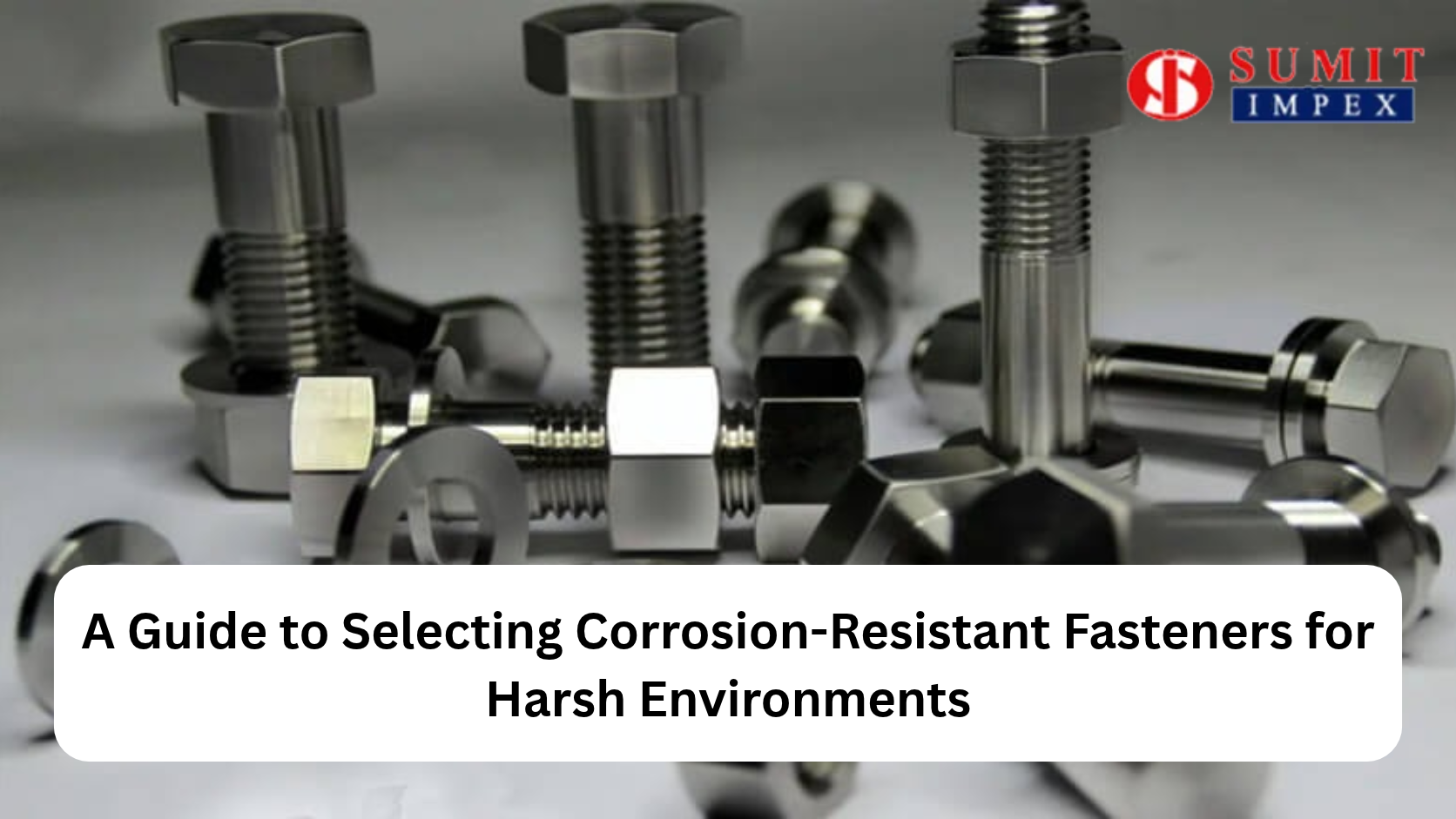
Stainless steel fasteners resist corrosion through the metal itself rather than through a surface layer. Stainless steel contains at least about 10.5% chromium, which supports formation of a passive oxide film. The film can reform after minor surface damage. That self-healing behavior is why they suit outdoor structures, process plants, and marine hardware where coatings get abraded during installation.
PTFE-Coated Fasteners for Additional Surface Protection
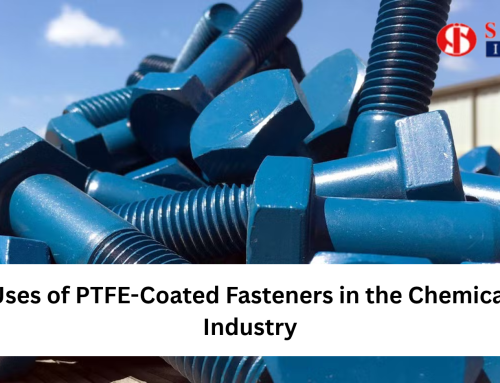
We also supply PTFE-coated fasteners with a fluoropolymer barrier over the base metal. The coating separates the base metal from the environment and reduces friction during tightening. It can also reduce galling and make disassembly easier later. Protection depends on the film staying intact, so handling and installation damage matter.
The right option depends on the environment, base material, coating system and operating conditions. At Sumit Impex, we supply stainless steel and coated fasteners for applications where corrosion resistance and reliable joint performance are important. Coated carbon steel and bare stainless steel address corrosion differently, so we match the fastener type to the application rather than treating one option as suitable for every case.
Which Stainless Steel Fastener Grades Should You Consider?
The following stainless steel grades cover several common industrial corrosion and temperature requirements.
SS 304 Fasteners for General Corrosion Resistance
SS 304 fasteners contain roughly 18% chromium and 8% nickel. They handle atmospheric exposure, fresh water and many mild chemical environments. They are the default for general industrial and architectural work. Chlorides are the limitation, since 304 pits in salt-laden conditions.
SS 316 Fasteners for Marine and Chloride-Rich Environments
SS 316 fasteners add 2 to 3 percent molybdenum, and that addition is what buys chloride resistance. Coastal structures, marine fittings, pool hardware, and chemical equipment often use 316 where chloride exposure makes 304 more vulnerable to pitting.
SS 317 Fasteners for Demanding Corrosive Conditions
SS 317 fasteners raise molybdenum to roughly 3 to 4 percent, extending resistance into more aggressive acid and chloride service. Pulp and paper, flue gas handling, and chemical processing use them where 316 reaches its limit.
SS 321 and SS 347 Fasteners for Specific High-Temperature Applications
SS 321 fasteners are stabilized with titanium, and SS 347 fasteners with niobium. Both additions bind carbon and reduce chromium carbide formation at grain boundaries. This helps limit sensitization and the resulting risk of intergranular corrosion after welding or prolonged exposure to elevated temperatures.
These stabilized grades answer a temperature problem, not a general corrosion one. These stabilized grades are designed primarily for elevated-temperature service. They are not automatic upgrades over 304 or 316 for every corrosive environment.
How Do You Choose the Right Corrosion-Resistant Fastener?
Identify the Chemicals, Chloride Levels, and Moisture Exposure
Define the medium first: which chemicals contact the fastener, at what concentration and temperature, and how much chloride is present. Coastal air, de-icing salt, and process brine all drive chloride attack. Note whether exposure is continuous, intermittent, or condensing, since wet-dry cycling concentrates salts at the surface.
Check Load Requirements, Temperature, and Material Compatibility
Confirm tensile and shear loads, including preload, against the fastener’s mechanical requirements. Austenitic stainless steel is generally softer than alloy steel at similar sizes. Establish the operating temperature range. Then check compatibility with the materials being joined, as dissimilar metals in an electrolyte set up galvanic cells.
Verify Specifications, Standards, and Material Certificates
We recommend specifying the grade, standard, and property class on every order. We can provide material documentation covering chemical and mechanical results with applicable heat traceability. A fastener marked A4 without documentation proves nothing at the point of failure.
What Mistakes Should You Avoid When Selecting SS Fasteners?
Selecting stainless steel fasteners requires matching alloy composition and mechanical properties to the operational environment to prevent joint failure:
- Buying on the basis of price alone, using cheaper 304 instead of 316 in chloride service leads to premature failure
- If galvanic corrosion is not considered, less noble metals such as aluminum or carbon steel are quickly destroyed
- Severe localized corrosion around the fastener joint results, notwithstanding isolation washers or suitable materials
- Carbide precipitation and metal sensitization occur while operating unstabilized grades between 425 and 870 degrees
- Ignoring thermal expansion differences between bolt and joint results in loss of preload under heat
- Assuming that all stainless steel grades are equal in corrosion resistance will lead you to choose the wrong alloy for severe service conditions.
- The bolt life in aggressive chemical environments is reduced when the difference in molybdenum and nickel concentration is ignored
Conclusion
Environmental exposure, mechanical requirements and grade-specific properties determine the right fastener. Start by defining the chemistry, chloride exposure, moisture and temperature.
Then confirm the required load capacity and material compatibility. Select the stainless grade that matches those conditions. Finally, verify the applicable standard, mechanical requirements and material certificates before approving the specification.
Related Posts