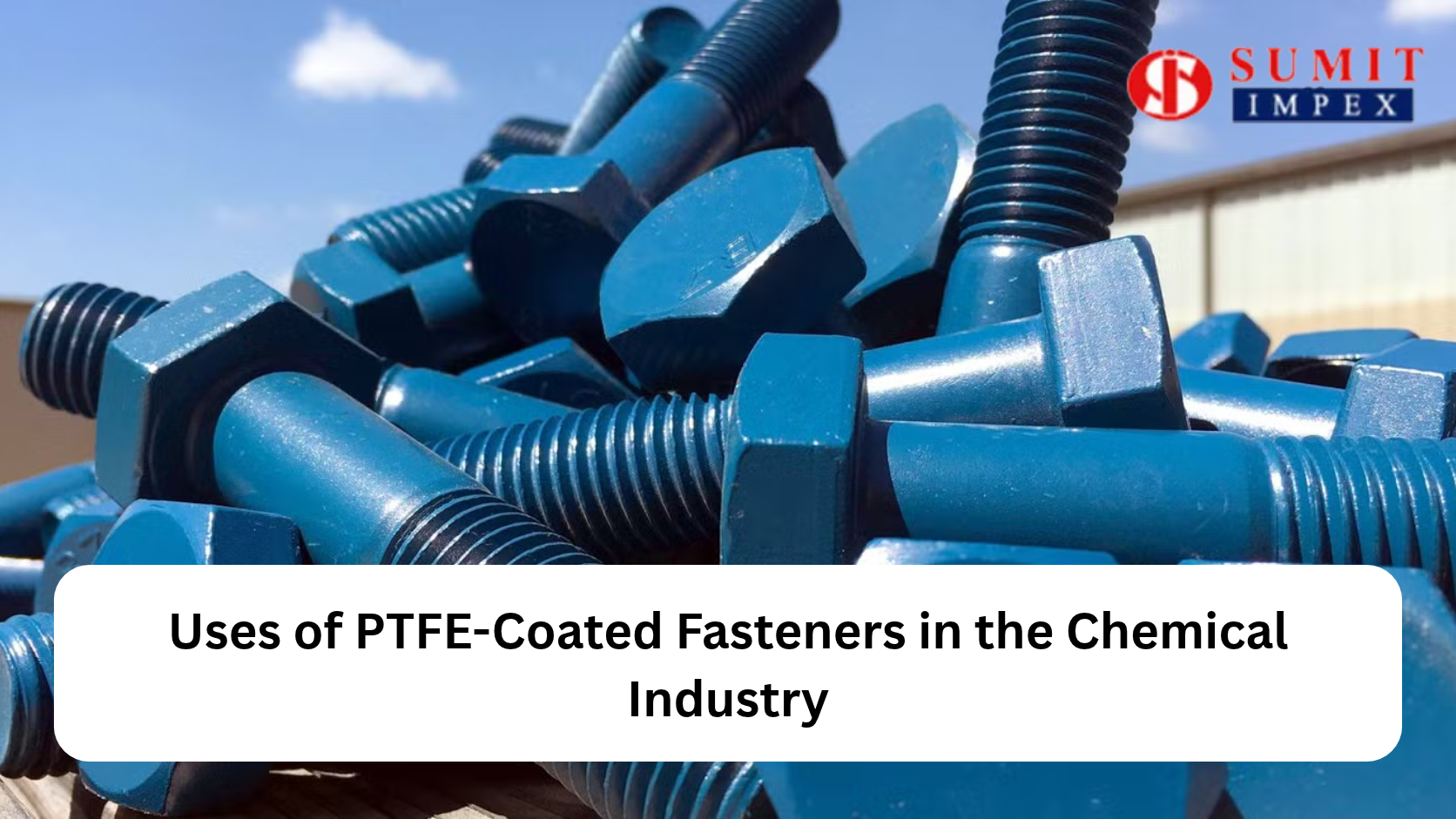
Chemical processing plants push hardware past what ordinary bolts can survive. Acids, caustics, solvents, and salt-laden moisture attack exposed threads all day, and maintenance crews need those same threads to loosen cleanly years later. A seized bolt on a reactor flange can stall a production line for hours. This is where PTFE-coated fasteners earn their place. Engineers specify them across equipment and connections that face corrosive media, high humidity, and frequent disassembly, because the fluoropolymer layer adds a chemical barrier and a low-friction surface that bare alloy threads cannot match. Through its fasteners range, Sumit Impex supports plants that depend on this combination.
Where Are PTFE-Coated Fasteners Used in the Chemical Industry?
Chemical Storage Tanks and Reactor Vessels
Bolted connections on tanks and reactors hold up under constant chemical contact. PTFE-coated fasteners suit these joints when the base metal and coating match the stored media and the operating pressure, giving a sealed, serviceable closure.
Chemical Processing Pipelines and Flanged Joints
Flanged pipe runs carry aggressive fluids between process units. These fasteners secure such joints tightly and still release during planned shutdowns, which keeps gaskets replaceable and flange faces undamaged across scheduled maintenance cycles.
Pumps, Valves, and Chemical Transfer Equipment
Pump housings and valve bonnets catch splashes, vapour, and washdown chemicals daily. PTFE-coated fasteners hold these assemblies together in wet, demanding environments where unprotected threads would pit, corrode, and lock within months.
Petrochemical and Refinery Equipment
Refineries run bolted connections through heat exchangers, columns, and fluid-handling skids. Where process temperatures and media fall inside the coating rating, these fasteners deliver dependable clamping on systems that rarely stop for repairs.
Chemical Dosing and Treatment Systems
Dosing pumps and treatment lines handle concentrated reagents in short, repeated bursts. PTFE-coated fasteners can serve these units when the chemical type and temperature stay within compatibility limits, protecting threads against drips and fume exposure.
How Do PTFE-Coated Fasteners Support These Applications?
Providing a Protective Surface Against Suitable Corrosive Exposure
The fluoropolymer film shields the underlying metal from direct contact with compatible chemicals. This barrier slows the pitting and rust that would otherwise weaken a bare threaded joint over time.
Reducing Friction During Fastener Installation and Removal
PTFE cuts thread friction sharply, so bolts drive in smoothly and torque translates into clamp load more predictably. Removal stays easy too, even after long service in contaminated settings.
Helping Minimize Galling in Threaded Connections
Stainless threads cold-weld under load, a failure called galling. The slick coating separates the mating surfaces, which lowers that risk and keeps studs and nuts reusable after disassembly.
What Factors Determine Their Suitability for Chemical Applications?
Chemical Concentration and Operating Temperature
Match the coating to the exact media. PTFE resists most chemicals, but concentration and service temperature set the real limit, and crossing the rated ceiling degrades the film and exposes the metal beneath.
Base Metal, Mechanical Strength, and Load Requirements
The coating protects, but the core carries the load. Select a base alloy, such as stainless or high nickel grades, with the tensile strength and grade the joint pressure and clamping force actually demand.
Coating Integrity, Thread Fit, and Installation Practices
A scratched or uneven coating lets corrosion start at the breach. Verify full film coverage, correct thread tolerance, and controlled torque during fitting so the protective layer stays intact through assembly.
When Should Alternative Fasteners Be Considered?
PTFE coating does not fit every chemical or every temperature band. Some strong oxidizers, specific solvent blends, and sustained high-heat service can exceed what the film tolerates, and a poor base metal choice undermines even a perfect coating. Specifiers should weigh the coating specification, the base material, the full range of process conditions, and the governing engineering and code requirements before committing. In the wrong application, a different coating or an uncoated high-grade alloy bolt may be the safer, longer-lasting answer. To weigh that trade-off before you order, our breakdown of PTFE Coated Fasteners vs Conventional Fasteners compares corrosion resistance, friction, and cost side by side.
Conclusion
Across the chemical sector, PTFE-coated fasteners turn up on storage tanks, reactor vessels, processing pipelines, flanged joints, pumps, valves, refinery skids, and dosing systems. They protect threads from corrosion, ease installation and removal, and curb galling on critical bolted connections. Their value holds only when the choice fits the job. Confirm chemical compatibility, operating temperature, base metal, and load before you specify them, and the result is a secure joint that stays serviceable for years. Contact Sumit Impex to source PTFE-coated fasteners matched to your chemical service conditions.
Related Posts