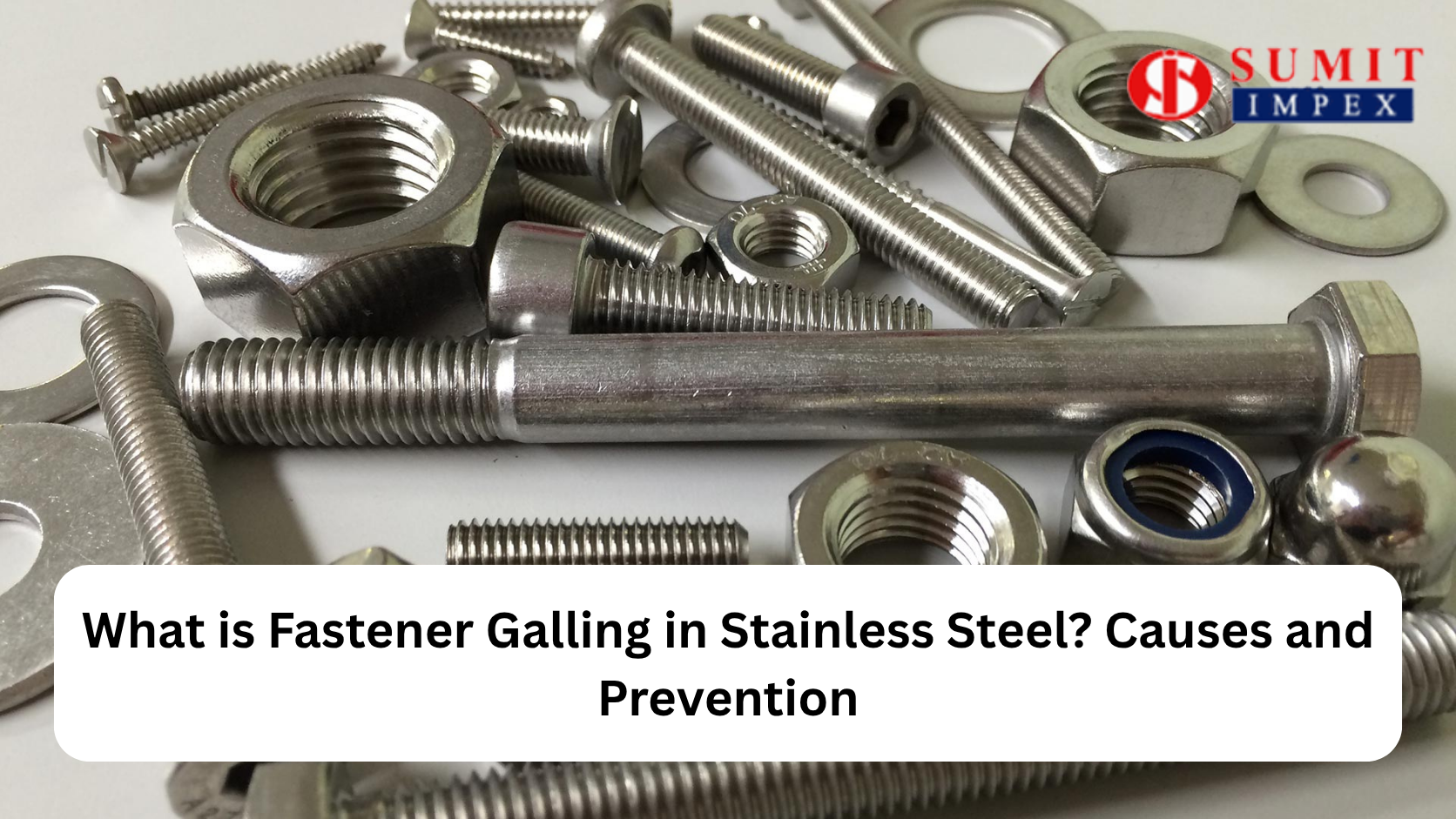
Stainless steel fasteners are used across piping systems, structural frameworks and equipment in oil and gas, chemical processing and marine environments, chosen mainly for corrosion resistance. But threaded connections carry a specific risk during installation: fastener galling. A bolt can seize halfway through tightening, damaging the component or holding up the job. Knowing what causes galling and how to avoid it keeps threaded connections working properly.
What is Fastener Galling in Stainless Steel?
Fastener Galling is a type of adhesive wear. Friction between the mating threads tears material off one surface and deposits it onto the other. As the nut and bolt rotate under load, heat builds up at the thread crests, enough to cause micro-welding. Further rotation shears those welds and drags rough metal across the threads, and the seizure gets worse with each turn. Galling occurs more easily in stainless steel than in carbon steel. Stainless alloys rely on a thin, self-repairing oxide layer for corrosion protection. Friction at the threads can break down that layer, exposing bare metal that bonds easily to the mating surface.
Why Does Galling Occur in Stainless Steel Fasteners?
Multiple factors generally contribute to the occurrence of fastener galling in stainless steel. High friction between mating threads, from dry or poorly matched surfaces, is usually where it starts. Excessive tightening torque forces threads together with more pressure than they can dissipate, and installing too quickly does not give heat a chance to escape between passes. Skipping lubrication removes the film that would otherwise stop metal surfaces from touching directly. Rough, damaged, or contaminated threads put stress on a few points instead of spreading it across the thread engagement. Repeated assembly wears down the surface finish over time. Heat from friction adds to all this, speeding up thread damage until the connection locks up. Choosing durable, well-finished Stainless Steel Fasteners reduces exposure to most of these risks.
How Can You Identify Fastener Galling?
Early identification of fastener galling prevents a seized bolt from suffering permanent thread damage.
- Resistance increases steadily instead of easing off as the fastener seats.
- The nut or bolt suddenly becomes hard to turn partway through installation.
- Visible thread damage or metal buildup appears on the fastener surface.
- The threaded connection seizes completely and will not turn in either direction.
Normal tightening resistance builds gradually as the fastener reaches its final torque value. Galling resistance spikes without warning, often with a grinding feel that a properly seating thread does not have.
How to Prevent Fastener Galling in Stainless Steel
Four practical steps deal with the main causes of galling and protect thread integrity during installation.
Use Appropriate Thread Lubrication
Anti-seize compounds or thread lubricants sit between the mating surfaces and cut down on friction and heat. The lubricant needs to suit the application and operating environment, since chemical exposure or extreme temperatures can wear out the wrong product quickly.
Control Tightening Speed and Torque
Installing fasteners slowly gives heat time to dissipate instead of building up at the thread crests. Stick to the manufacturer’s recommended torque values rather than tightening by feel. Torque-control tools are worth using on critical connections, since over-tightening risks both galling and structural failure.
Inspect and Clean Threads
Dirt, metal shavings, and other contaminants create friction points that lubrication alone will not fix. Threads should be checked for roughness or damage before assembly, since a compromised surface galls far more easily than a clean one.
Select the Right Fastener Combination
Match the stainless steel grade, surface finish, and thread condition to the application. Temperature, corrosion exposure, and load requirements all affect which combination holds up best against galling. Understanding the specific applications for SS fasteners across different industries helps determine the right combination of materials and finishes for your service environment.
What to Do When Stainless Steel Fasteners Start to Gall?
Acting quickly at the first sign of galling limits damage to the fastener and the assembly around it.
- Stop tightening as soon as unusual resistance appears during installation.
- Do not force the fastener further, as this worsens existing thread damage.
- Removal and replacement are usually needed once threads show visible scoring or the connection has seized.
- Check both the nut and the bolt for damage before fitting new hardware.
Conclusion
Fastener Galling in stainless steel comes down to friction, heat, excessive torque and contaminated or poorly matched threads. Lubrication, controlled installation, clean threads and the right fastener combination address these causes and keep connections serviceable over repeated use. Sumit Impex manufactures and exports stainless steel fasteners for demanding industrial applications. Contact our team to discuss fastener specifications for your project.
Related Posts