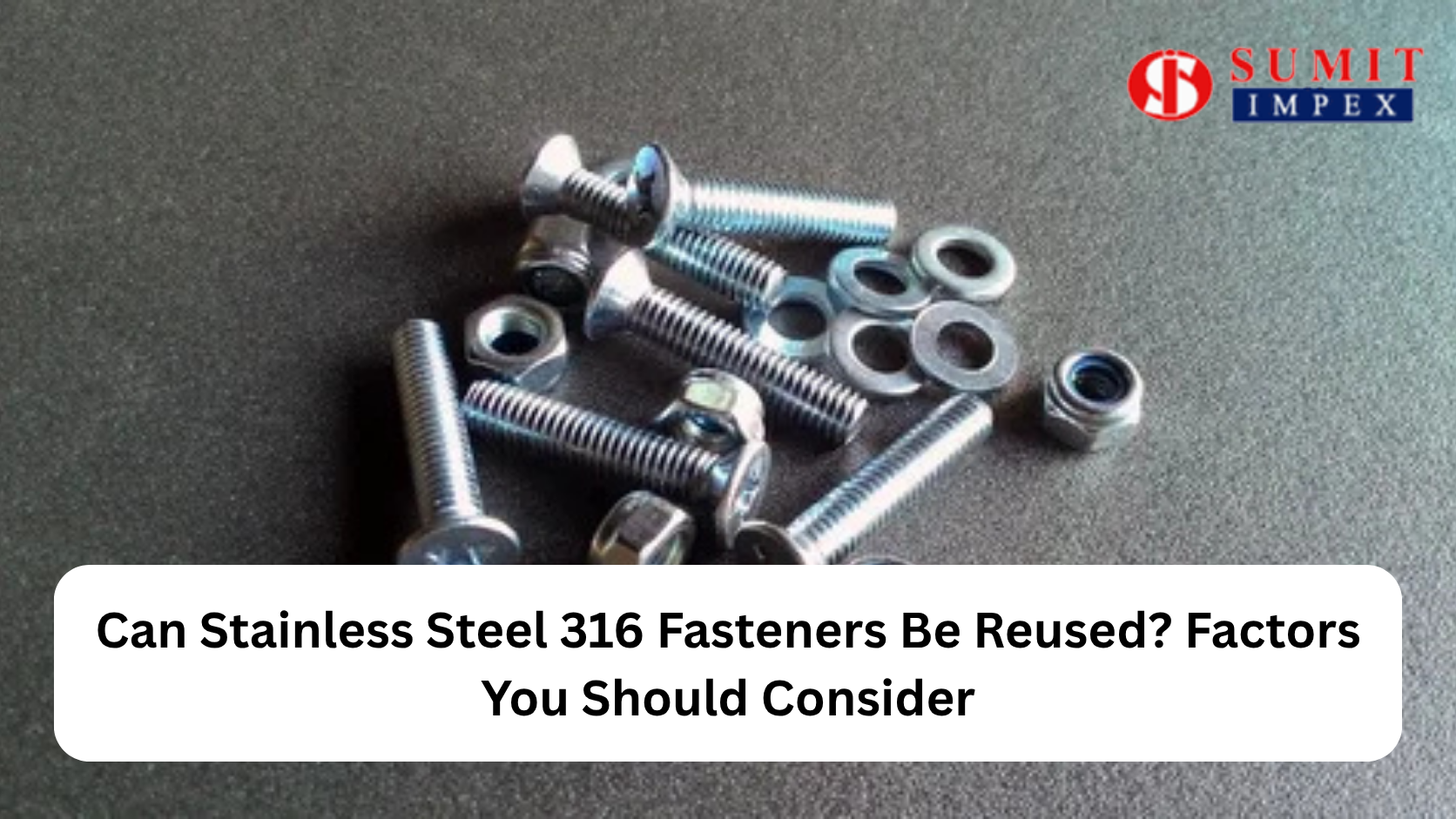
During scheduled plant turnarounds, maintenance crews face a critical decision: inspect and reinstall existing bolts or discard them entirely. Austenitic 316 stainless fasteners offer high molybdenum content (2–3%) to prevent chloride pitting and crevice corrosion in marine and chemical processing environments. That metallurgy extends service life, though it does not eliminate mechanical wear, thread galling or stress corrosion cracking. Select from our inventory of heavy-hex bolts, threaded rods, and cap screws in the SS 316 fastener lineup specifically certified for high-torque re-engagement across multiple maintenance cycles.
What Are Stainless Steel 316 Fasteners?
Stainless steel 316 fasteners are austenitic alloy components containing 16-18% chromium, 10-14% nickel, and 2-3% molybdenum, the element that separates 316 from standard 304 stock and gives it superior resistance to chloride pitting and crevice corrosion. This composition delivers tensile strength between 515 and 620 MPa alongside dependable performance from cryogenic temperatures up to roughly 800°C under intermittent exposure. Bolts, nuts, screws, washers and studs made from 316 dominate applications where saltwater, acidic process fluids or pharmaceutical-grade cleanliness rule out lower alloys. Offshore platforms, desalination plants, food processing lines and chemical refineries specify this grade as standard practice.
Can Stainless Steel 316 Fasteners Be Reused?
Yes, stainless steel 316 fasteners can be reused, but they should be inspected under documented conditions to establish mechanical integrity and fitness for the particular application. Re-use is a good option for low-stress, non-critical joints where the fastener shows no visible wear and the torque history is within the required specification. High-pressure piping, structural connections, and safety-critical joints call for a stricter standard. When inspection results sit anywhere near the margin, replacement remains the safer, lower-risk choice for the application.
Factors to Consider Before Reusing Stainless Steel 316 Fasteners
Several inspection points determine whether a used fastener can go back into service safely. Reviewing each one prevents costly failures and unplanned downtime later.
Visual Signs of Damage
A close visual check catches problems before they become failures. Thread wear reduces clamping force even when threads still turn smoothly by hand. Cracks near the head or shank rule out reuse immediately. Bending, surface dents, or any visible deformation change how load is distributed across the fastener body.
Corrosion and Chemical Exposure
Sustained exposure to chemical or saline environments imposes limits on corrosion resistance of stainless steel 316 fasteners. Pitting corrosion forms tiny, deep pits that deteriorate the fastener from inside. Crevice corrosion forms under washers and nuts where oxygen can not flow. Chloride exposure or aggressive chemical contact accelerates both processes and rules out reuse.
Thread Condition
Thread integrity determines whether a fastener can carry its rated load safely. Damaged or stripped threads lose grip strength and cannot reach proper preload. Thread deformation from cross-threading during removal often goes unnoticed until reinstallation fails. Confirm smooth engagement with the mating component by hand before returning any fastener to service.
Load History
How a fastener performed in its previous installation shapes its reuse potential. Static loading in a fixed joint causes far less fatigue than dynamic loading from vibration or cyclical movement. High-stress applications, including pressure vessels and rotating machinery, accumulate microscopic fatigue that visual inspection alone cannot detect.
Torque and Tightening History
A fastener’s capacity to maintain a specified preload is reduced with repeated tightening cycles. The material might already have exceeded the yield point during original installation. If preload is lost due to cyclic loading of vibration, the clamping force will decrease with each use. In most cases, fasteners that have been tightened and then untightened more than twice should be replaced.
Operating Temperature
Sintered stainless steel 316 fasteners are used to ensure safe clamping, and their mechanical properties are influenced by temperature history. Carbides may form in the material, which affects corrosion resistance at grain boundaries, when exposed to high continuous temperatures. Thermal cycling causes stress in the service that is not detectable by visual inspection.
Industry Standards and Safety Requirements
Certain sectors mandate fastener replacement regardless of visual condition or inspection results. Aerospace assemblies, offshore platforms and pressure systems governed by ASME or API codes typically require new fasteners at every service interval. These standards exist because the consequences in critical systems far outweigh the cost of a replacement bolt.
When Should Stainless Steel 316 Fasteners Be Replaced?
Replace stainless steel 316 fasteners immediately when visible damage, distortion or deformed threads are found on inspection. Significant corrosion, especially pitting or crevice attack close to the load-bearing surfaces, eliminates any reuse option regardless of remaining strength. If the part strips even a little when reinstalling, disqualify it on the spot. Fasteners taken from pressure testing, high-vibration equipment or other critical service applications should normally be discarded. When inspection results remain uncertain or documentation is incomplete, replacement removes the risk entirely.
Conclusion
Stainless steel 316 fasteners can often go back into service, provided inspection confirms sound threads, no corrosion and load history within specification. Sumit Impex is a Mumbai-based manufacturer of stainless steel 316 fasteners that exports to industrial buyers in a variety of sectors. Documented inspection standards are implemented to safeguard personnel and equipment. Contact our team to inquire about the supply of bulk fasteners or the selection of a specific grade.
Related Posts