In EPC (Engineering, Procurement & Construction) projects, the fastening system is what holds everything together. Structural integrity, equipment stability, and long-term performance depend on getting this selection right from the start. Corrosion, vibration, heavy loads, and harsh operating conditions are not edge cases in these environments. They are routine. Stainless steel fasteners have become the preferred choice across industrial and infrastructure projects because they handle these conditions without the maintenance burden that coated carbon steel alternatives carry. Any procurement decision in this space begins with understanding what a reliable corrosion resistant fastener actually demands in practice.
What Are Stainless Steel Fasteners?
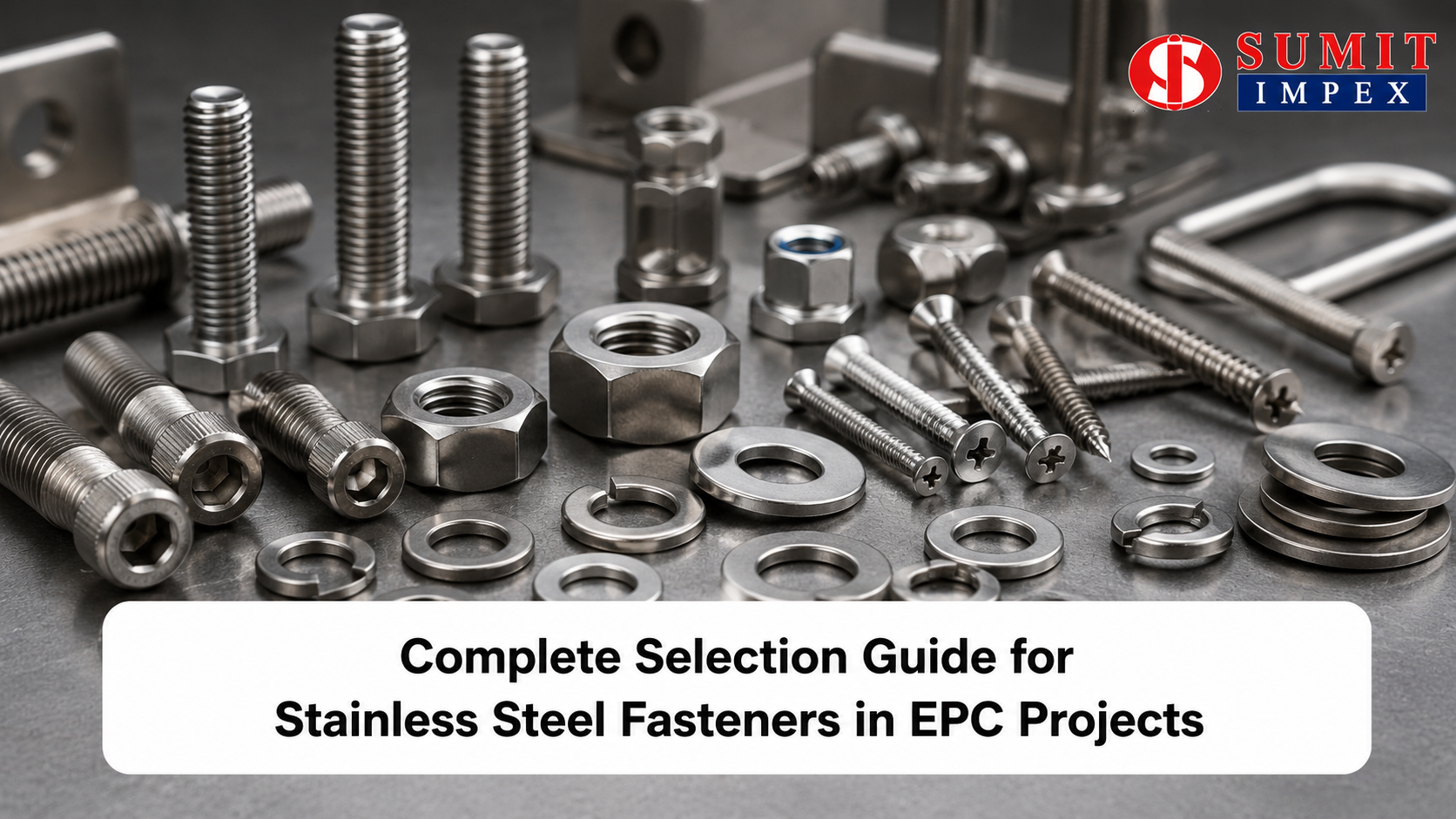
Stainless steel fasteners are mechanical components that join or secure materials in industrial assemblies. Bolts, nuts, screws, washers and stud bolts each serve a distinct structural role, and the wrong selection carries real consequences in an EPC setting.
SS 304 covers general-purpose applications, SS 316 adds molybdenum to resist chloride pitting, and duplex grades deliver yield strength that neither standard grade can match.
Carbon steel fasteners depend on applied coatings that degrade over time. Stainless steel forms a chromium oxide passive layer inherent to the alloy itself. It self-repairs when damaged, which is why stainless steel fasteners outlast coated alternatives in offshore, chemical, and water treatment environments.
Key Factors to Consider When Selecting Stainless Steel Fasteners
Every EPC project presents a different combination of environmental, mechanical, and regulatory demands. These six parameters drive the selection decision.
Material Grade Selection
SS 304 suits general atmospheric and mild industrial conditions. SS 316 handles chloride-rich and acidic environments. Duplex grades are specified where high tensile strength and corrosion resistance are both required.
Corrosion Resistance Requirements
Coastal sites, offshore platforms, and chemical plants each impose different corrosive threats. Chloride concentration, operating pH and sulphur compound exposure determine which grade holds up over the full service life.
Load and Strength Requirements
Tensile strength and proof load values must match the mechanical demands at each joint. An undersized fastener in a high-load flange connection is a failure point regardless of its material quality.
Temperature Resistance
High-temperature assemblies in power generation and petrochemical plants require grades that retain mechanical properties under sustained thermal load. Standard austenitic grades perform well above 500°C, but operating conditions must be verified.
Thread Type and Fastener Size
Thread pitch, form and diameter must be compatible with matching components. Stress concentrates at these points, making galling more likely to occur with mismatched threads, particularly in stainless-on-stainless contact.
Compliance with Standards
ASTM A193, DIN 931, and ISO 898 define the minimum mechanical and dimensional benchmarks. A qualified SS fasteners supplier must demonstrate full compliance for every grade in the supply scope.
Types of Stainless Steel Fasteners Used in EPC Projects
Different project disciplines call for different types of stainless steel fasteners. Knowing which type fits which application prevents costly substitutions during construction.
Bolts and Nuts
Hex bolts and heavy hex nuts handle high shear and tensile loads in structural steel connections and equipment foundations. Dimensional standardisation makes them straightforward to replace during scheduled maintenance.
Screws
In instrumentation panels, cable trays and lightweight assemblies, machine screws and self-tapping types are used where controlled torque application is more important than raw load capacity.
Stud Bolts
Flange connections on pipelines and pressure vessels depend on stud bolts for uniform gasket compression across the full sealing face. They also allow easier disassembly in confined maintenance spaces.
Washers
Plain and spring washers distribute bearing loads and resist vibration-induced loosening. In rotating equipment installations, leaving out a washer is not a minor omission.
Applications of Stainless Steel Fasteners in EPC Projects
Stainless steel fastener applications cover every major EPC sector, from offshore oil platforms to municipal water infrastructure.
Oil and Gas Projects
Offshore platforms and onshore refineries demand resistance to seawater, hydrogen sulphide, and thermal cycling. SS 316 and duplex grades are standard in these specifications.
Power Plants
Steam turbines, heat exchangers, and boiler assemblies require fasteners that maintain mechanical integrity at sustained high temperatures, where thermal expansion between joined components is a constant design variable.
Infrastructure and Construction
Bridges, port structures, and industrial buildings are subjected to long-term atmospheric exposure. Stainless grades eliminate the recurring cost of replacing corroded hardware across decades of service.
Water Treatment Plants
Potable water and wastewater systems require materials that comply with quality regulations and resist the biological and chemical conditions found in treatment tanks and pipework.
Chemical Processing Industry
Process pipelines and reactor vessels handle acids, alkalis, and solvents that degrade carbon steel rapidly. Selecting the correct stainless grade here is a basic engineering requirement, not a premium option.
Benefits of Using Stainless Steel Fasteners
Stainless steel fasteners deliver measurable advantages across performance and lifecycle cost in EPC project specifications.
- The self-repairing chromium oxide layer provides corrosion resistance in marine, chemical, and industrial environments with no external coating required.
- Service life in aggressive conditions regularly exceeds 25 years, outperforming galvanised carbon steel alternatives across comparable exposure conditions.
- Lower maintenance frequency reduces lifecycle costs, since fewer replacement cycles and shorter shutdown windows produce direct operational savings.
- Austenitic and duplex grades satisfy the tensile, shear, and fatigue demands of heavy structural and process engineering connections.
- In safety-critical joints on pressure vessels and load-bearing frames, stainless steel fasteners maintain clamping force over time without the relaxation that corroded threads cause.
- When evaluated on total cost of ownership rather than unit price, stainless fasteners consistently outperform alternatives in EPC asset lifecycles.
Common Mistakes to Avoid During Fastener Selection
Specifying the wrong grade tops the list. SS 304 in a chloride-heavy coastal environment develops crevice corrosion at thread contacts well before the intended service interval, often without visible warning until the surrounding assembly is already compromised.
Environmental exposure gets underestimated at the early engineering stage more than any other variable. A site logged as general industrial can involve salt air or chemical splashes that genuinely demand SS 316 or a duplex grade. Load sizing deserves equal rigour; a fastener dimensioned by diameter alone, without verifying tensile strength class, will pass visual inspection and fail under stress.
Fasteners without mill test reports introduce supply chain liability. Installing stainless steel fasteners against carbon steel or aluminium without isolation creates galvanic corrosion cells that attack silently.
How to Choose the Right Stainless Steel Fasteners Supplier
A capable stainless steel fasteners supplier for EPC work provides certified material quality with full documentation traceability. Grade range matters beyond a single stock item; large EPC facilities frequently require SS 304, SS 316 and duplex fasteners across different sections of the same site. Consolidating supply with a qualified stainless steel fasteners manufacturer, Sumit Impex, reduces quality control risk and simplifies procurement management.
Compliance with ASTM and ISO should be available on demand, not just listed in a catalogue. Ability to supply in bulk with reliable delivery scheduling is a must, because any delay in fasteners can delay structural erection or equipment setting on a critical programme path. Technical support capability, covering grade selection, torque specifications, and material compatibility, is the marker that distinguishes a reliable manufacturing partner from a simple distributor.
EPC Fastener Selection Checklist
- Confirm the operating environment: offshore, chemical, high-temperature, or potable water
- Select grade based on corrosion exposure: SS 304, SS 316, or Duplex
- Verify tensile strength class against joint design loads
- Confirm thread type, pitch, and diameter compatibility with mating components
- Check ASTM, DIN, or ISO compliance per project specification
- Request mill test reports and third-party inspection certificates
- Assess bulk supply capacity and delivery track record
Conclusion
Choosing the right stainless steel fasteners for an EPC project is an engineering decision that has a direct impact on safety, durability and the long-term reliability of the project. Attention to grade selection, environmental suitability and mechanical compliance needs to be deliberate at the specification stage. Working with an experienced stainless steel fasteners manufacturer or stainless steel fasteners supplier that has proven EPC experience means the fastener quality holds from installation through the full service life of the asset. Choose high‑quality stainless steel fasteners from a trusted supplier to keep your project safe and reliable from start to finish.
Related Posts