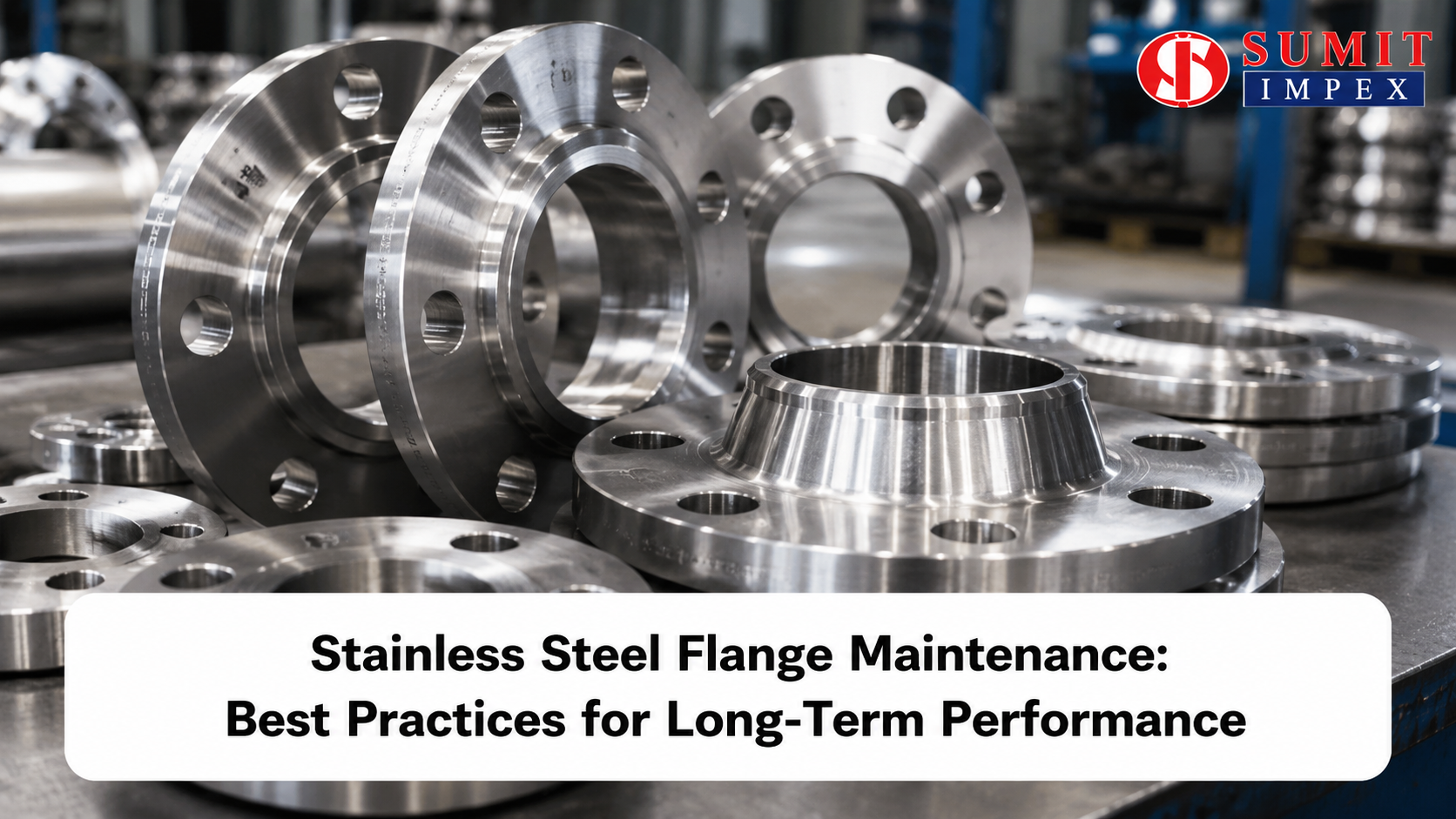
Heavy systems connect pipes, valves and pumps with stainless steel flanges. They provide leak-free, secure pipe connections under pressure. But these components are stressed in harsh industrial environments. They perform differently due to corrosion, constant pressure, vibrations and poor installation practices. Without regular inspection, the system will wear out and the joints will fail. Clear flange maintenance guide prevents unplanned shutdowns and maintains the overall safety of the system. Maintenance keeps the system safe. Operators must be fully aware of the various types of stainless steel flange applications to choose the right inspection procedures. Constant work prevents small issues from turning into huge pipeline leaks.
What Are Stainless Steel Flanges?
Flanges are mechanical components that are used to bolt pipes, valves, pumps and equipment. They form a piping system and allow access for cleaning. Depending on the pressure needs, plants use several common types of flanges, including weld neck flanges, slip-on flanges, blind flanges, socket weld flanges and threaded flanges.
The choice of material depends on the environment. Common grades include SS 304, SS 316 and duplex stainless steel. SS 316 is resistant to chloride corrosion and SS 304 is used for utilities. Duplex stainless steel has more strength. In industrial systems, such materials are preferred as they are more resistant to temperature changes and mechanical loads than standard carbon steel.
Why Stainless Steel Flange Maintenance Matters
Flange joints are often neglected and degrade quickly. Fluid leaks indicate gasket deterioration or face damage. Regular cleaning maintains the passive chromium oxide layer that prevents rust. When dirt deposits accumulate on the metal surface, crevice corrosion starts.
Regular maintenance extends the life span of piping systems. It’s cheaper for the company to replace a gasket or tighten up the torque on bolts than to weld in a new flange component. This practice minimises plant downtime and overhead costs.
Blown flange joints are dangerous in high-pressure environments. Leaked process chemicals injure workers nearby. Regular inspections protect downstream equipment and ensure the plant is in compliance with ASME or API rules. Unchecked micro-leaks erode sealing faces, destroying the metal permanently.
Best Practices for Stainless Steel Flange Maintenance
Regular Visual Inspection
Inspectors must walk lines regularly to look for trouble. Check for surface corrosion, small cracks and physical deformation on flange rings. Carefully check the bolt holes for signs of stress cracking. Also, watch for outside factors like salt in the air, which can cause rust to form quickly
Monitor Bolt Tightness
Vibration from pumps and thermal expansion loosen bolts over time. Check bolt torque using calibrated manual tools. Uneven torque causes gasket crushing or localized gaps. Correct tension stops leaks before they start. Tighten them in a cross-pattern sequence. Never guess the tightness by hand. Always follow standard engineering torque charts.
Clean Flanges Properly
Remove dirt, chemical buildup and contaminants from flange faces during shutdowns. Use only approved stainless steel wire brushes that do not leave any carbon steel contamination. Non-chlorinated cleaners will prevent stress corrosion cracking in hot lines. Wipe off any remaining oily films thoroughly. Clean the bolt threads too.
Inspect Gaskets & Sealing Surfaces
Check flange faces for deep scratches or pitting during teardowns. Sealing surfaces must be smooth or have the specified standard serration pattern. Never attempt to scrape faces with sharp chisels. Replace old gaskets during every single reassembly to maintain proper sealing performance. Reusing old gaskets causes micro-leaks. Match the new gasket to the fluid type.
Prevent Corrosion Risks
Do not expose flanges to incompatible chemicals or pooling fluids. Stainless steel in direct contact with other metals without insulation causes galvanic corrosion. Use appropriate isolation kits, sleeves and washers to mechanically isolate connections. Check adjacent components for degradation of the coating. Prevent chemical pooling in the atmosphere.
Schedule Preventive Maintenance
Establish routine inspection intervals based on the system pressure and temperature. High-pressure lines require monthly checks. Low-risk utility lines are inspected on a yearly basis. Sticking strictly to this schedule keeps the lines safe. Recording these checks provides a clear maintenance history. It helps to plan budget allocation for replacement parts.
Common Problems in Stainless Steel Flanges & Solutions
Corrosion Issues
Pitting and crevice corrosion happen in stagnant zones or under deposits. The solution is cleaning surfaces regularly and switching to higher grades like SS 316 or duplex steel if the process fluid is highly corrosive.
Leakage Problems
Leaks usually stem from gasket failure or incorrect bolt tightening. To fix this, replace the old gasket, clean the flange faces completely and use a cross-pattern torque method to tighten bolts to specification.
Cracks or Mechanical Damage
Thermal shock or over-tightening causes cracks near the hub. Early detection requires regular dye penetrant testing. Damaged flanges cannot be repaired safely and require immediate replacement.
Misalignment Issues
Pipes not aligned put uneven stresses on the flange joint. The solution is to re-position the piping supports prior to bolting the flanges together. Do not use the bolts to draw the flanges together. This leads to uneven gasket compression.
Industries That Require Regular Flange Maintenance
Oil & Gas Industry
High-pressure pipeline systems carry crude oil and natural gas. Flange failure here causes explosions or environmental contamination. Frequent monitoring is mandatory.
Chemical Processing
Plants handle acids, alkalis and solvents. Corrosive environments attack piping joints constantly. Regular maintenance keeps aggressive chemicals contained inside the system.
Power Plants
Facilities deal with heat and pressure-intensive operations. Steam lines experience high thermal cycles that stress flange bolts. Tight checks prevent catastrophic steam leaks. Bolts creep at elevated temperatures and lose clamping force.
Water Treatment Facilities
In water treatment systems, raw water and chemicals move through continuous-flow lines, where constant moisture promotes external corrosion. Reliable municipal networks still require attention to chlorine dosing lines to minimise localised pitting and ensure long-term integrity.
Common Mistakes to Avoid During Flange Maintenance
Over-tightening bolts is a common error. It crushes gaskets and distorts the flange ring. A frequent issue is the use of impact wrenches without calibration. Using cleaning chemicals that are not compatible with stainless steel is another mistake. For example, using carbon steel brushes or chlorine-based solvents will ruin the stainless steel surface.
Never ignore small leaks or minor corrosion signs. Small weeping joints quickly become major blowouts under pressure spikes. Delaying scheduled inspections to save time increases long-term repair costs. Finally, using incorrect gasket materials leads to chemical degradation. Always check the pressure rating and material compatibility of the gasket against the pipe fluid before installation.
How to Choose High-Quality Stainless Steel Flanges
Buying the right product reduces future maintenance work. Select the steel grade in accordance with the working environment. Flanges should be of standard wall thicknesses or dimensions, for example, ASTM or ASME. The flange pressure rating should be equal to the highest system pressure. The chemical composition should be verified by checking supplier certifications and material test reports. Check if the supplier can customize sizes and types for particular plant layouts. Inferior quality imports do not conform to the dimensional tolerances and thus, proper bolt alignment is impossible. As a trusted Stainless Steel Flange supplier, Sumit Impex ensures all components meet these strict industrial standards and dimensional tolerances.
Flange Maintenance Checklist
- Verify torque settings before tightening.
- Check flange face for deep scratches.
- Use new gaskets on every reassembly.
- Look for rust around bolt holes.
- Confirm pipe alignment is correct.
Conclusion
The maintenance of flanges is an important factor in preventing unplanned failures in industrial systems. Workplace safety, operational downtime reduction and pipeline integrity are all improved by regular inspection. Preventive maintenance is the best way to avoid expensive emergency repairs. It is easier if you start with premium materials. Sumit Impex is a leading Stainless Steel Flange Manufacturer & Supplier in Mumbai, India. To ensure the best performance and longevity of your operation’s piping systems, you need high-quality stainless steel flanges from a dependable supplier.
Related Posts