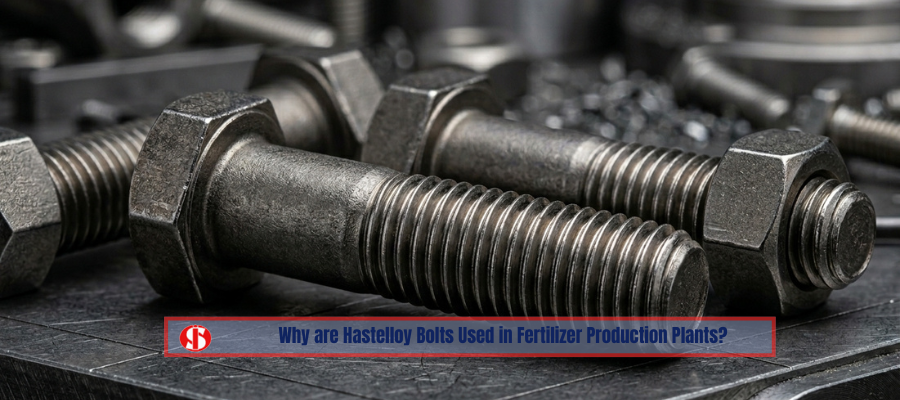
The fertilizer production plants are some of the most challenging working environments in the industry. Fertilizer production involves frequent contact with aggressive chemicals like various acids and volatile compounds. They also cope with high temperatures and pressure on a daily basis. In such an environment, standard hardware soon fails from rapid corrosion or heat stress. To reduce these risks, Sumit Impex offers specialized fasteners. The selection of fastening materials is more than just a way to keep parts together. This is to prevent leaks and to keep the whole facility safe. Hastelloy bolts have become a preferred choice for these applications because they can handle chemical exposure that would destroy other metals. As a specialized Hastelloy bolts supplier, we see how these components perform when cheaper alternatives fail.
What Are Hastelloy Bolts?
Hastelloy is a nickel based alloy that is meant to survive in the most hostile of chemical processing environments. Hastelloy is known for its high nickel content along with other alloying elements such as molybdenum and chromium.
Overview of Nickel-Based Alloys
Hastelloy is a nickel-based alloy that maintains its physical structure even when it is exposed to harsh industrial acids. It is not a single metal but a combination of elements designed to resist oxidation and chemical reduction.
Key Chemical Elements
The chemistry of Hastelloy consists of nickel, molybdenum and chromium as the main building blocks. These specific elements work to build a protective barrier on the surface of the bolt. This barrier prevents the metal from breaking down.
Common Material Grades
There are several types used in industry like C276 and C22 which have slightly different chemical makeups. These variations allow engineers to choose the specific grade that matches the chemicals present in their plant. Each grade offers a different level of protection.
Manufacturing and Strength
Manufacturers produce these bolts to have high corrosion resistance and physical strength. The process involves exact thermal treatments to make sure the metal doesn’t become brittle. This results in a fastener that can hold heavy loads in very corrosive settings.
Key Properties of Hastelloy Bolts
Exceptional Corrosion Resistance
One of the main reasons plants use these bolts is their ability to resist both oxidizing and reducing environments. Fertilizer plants often contain equipment that is exposed to sulfuric or phosphoric acid. Hastelloy bolts do not easily degrade when exposed to these harsh chemicals. This resistance allows the fasteners to last far longer than standard steel alternatives.
High Temperature Stability
Fertilizer production uses heat to initiate chemical reactions. At high temperatures, common bolts will lose strength or become soft. Hastelloy maintains its mechanical integrity at high temperatures and has a very low thermal expansion and contraction. The integrity of the joints is maintained and loosening during temperature excursions is avoided.
Mechanical Strength and Durability
The bolts are highly tensile, meaning that they can take a lot of physical stress without breaking. They are built to last and require very little maintenance once installed. This durability is a big plus for large-scale plants where breaking production to fix a broken bolt is expensive and time-consuming.
Resistance to Pitting and Crevice Corrosion
In many industrial settings, corrosion happens in small cracks or pits on the metal surface. This is often where standard stainless steel fails first. Hastelloy is formulated to avoid pitting and crevice corrosion. This is important in fertilizer plants where moisture and chemicals can become trapped in confined areas.
Why Hastelloy Bolts Are Ideal for Fertilizer Plants
Using specialized alloys is necessary because fertilizer production uses raw materials that eat through basic metals. Hastelloy bolts provide a reliable way to secure heavy machinery and pressurized systems.
Compatibility with Harsh Chemicals
These fasteners perform well in acidic and chemical environments such as fertilizer processing. They do not react with the ammonia and nitric acid used normally in the production line.
Enhanced Equipment Safety
Using high-quality bolts reduces the risk of dangerous leakages and structural failures. When a bolt fails in a chemical plant, it can lead to accidents. These bolts keep the equipment secure.
Long Term Cost Efficiency
These bolts are more expensive to start with, but reduce the replacement and maintenance costs over time. You will not have to replace them as often.
Reliability in Continuous Operations
Fertilizer plants usually run 24 hours a day and need to avoid shutdowns. Hastelloy bolts support uninterrupted production by staying functional for years. This reliability helps the plant meet its output goals.
Key Applications of Hastelloy Bolts in Fertilizer Industry
These bolts are used in many parts of a fertilizer plant. They are most often found in reactors and pressure vessels where core chemical reactions take place under high pressure. Engineers specify applications of Hastelloy alloy bolts in the chemical industry to keep these connections leak-proof and safe. These fasteners are also used for internal acid corrosion and external weathering for pipelines and storage tanks. In heat exchangers, the metal must survive frequent temperature changes that would fatigue or crack lower-grade bolts. Other equipment, including mixers, pumps and valves keep working because these fasteners do not degrade when in contact with corrosive slurries. They are exploited to keep the entire infrastructure safe, no matter what aggressive chemicals are being worked on inside.
Role of a Reliable Hastelloy Bolts Supplier
Working with a certified and experienced Hastelloy bolts supplier is a key part of maintaining a plant. At Sumit Impex, we know that the quality of the material is the most important factor. A good supplier must ensure that bolts in every batch meet the international standards like ASTM and ASME. The bolts have been tested for strength and chemical composition according to those standards. If a supplier gives a poor-quality material, that could cause a failure in the plant. Another consideration is availability. Large-scale projects require thousands of bolts in various grades and sizes. A reliable supplier keeps a large inventory to meet these needs quickly. Timely delivery is also important because repair schedules are often very tight. If a plant is down, every day costs money.
Comparison with Other Fastener Materials
Carbon steel and stainless steel often fail in fertilizer plants. Carbon steel rusts quickly when exposed to moisture or acids. Stainless steel is better but prone to stress corrosion cracking and pitting. Hastelloy bolts provide much higher protection, lasting years where other metals fail in months. The main benefit is the lower total cost of ownership. Carbon steel may be cheaper initially, but it is expensive in the long run as it often replaces labour. High-quality fasteners also prevent bolts from snapping and protect your machinery from damage. These alloys are the most logical choice for safety and long-term savings when it comes to critical joints.
How to Choose the Right Hastelloy Bolts Supplier
Begin by checking the certifications of the Hastelloy bolts supplier. Ask for Mill Test Reports to confirm the chemical breakdown of the metal. A lot of points go in favour of suppliers with experience in fertilizer plants, as they understand the environmental challenges involved. Also check their ability to customize for non-standard machinery sizes. Finally check their supply capacity. Sumit Impex, a trustworthy partner, carries sufficient inventory to back large projects without any delay. Selecting a supplier with the right technical knowledge and levels of stock will not only help to keep your plant operational, but will also avoid the dangers of using inferior hardware.
Conclusion
The choice of materials for a fertilizer plant is critical for both safety and profitability. Hastelloy bolts are corrosion-resistant fasteners used to fasten equipment together in the presence of acids and heat. They provide the durability required to stop leaks and keep production going. They may be more expensive at the beginning, but safety and reduced maintenance make them the industry standard. Sumit Impex is a leading supplier of Hastelloy Bolts that will help you to reduce the cost of frequent repairs and focus on efficient
Related Posts