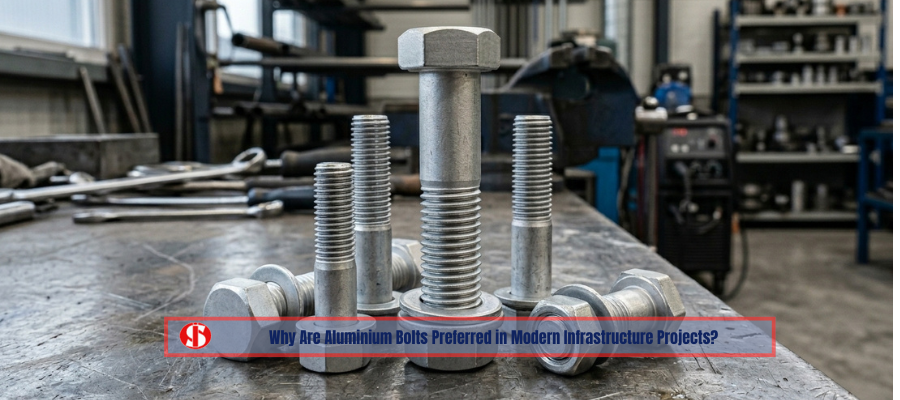
Modern infrastructure projects run on tighter schedules, stricter load specs, and longer exposure to outdoor conditions. The fastening material selected plays a direct role in how a structure holds up over time and what it costs to maintain. Aluminium bolts are increasingly popular in construction and engineering, solving several practical problems at once. Procurement teams and engineers are increasingly using aluminium alloy bolts where the weight of steel is not required or increases the need for maintenance.
What Are Aluminium Bolts?
Aluminium bolts are threaded fasteners produced from aluminium, to which is added magnesium, silicon or zinc to improve their mechanical strength without increasing their weight. The most common types are aluminium alloy bolts in grades 6061 and 7075 which are used in a wide variety of structural and high-load applications. The 2024 grade is also used in projects related to aerospace.
They are manufactured to ASTM, ISO and DIN standards and have well-documented performance specifications. The aluminium bolt specification chart and standards reference can be used to help buyers determine the right grade, thread profile and tensile rating for specific projects. This is particularly true in the context of civil, rail and industrial procurement.
Key Properties of Aluminium Bolts
Knowing the core properties of aluminium bolts helps in deciding where they are the right fit and where they are not. Each property has direct relevance to specific site and application conditions.
Lightweight But Strong
Aluminium bolts are about one third the weight of steel, so they are a significant weight reduction to the structure. For facades, transport frames and elevated structures, where weight reduction is important, but a significant reduction in fastening performance is not.
Excellent Corrosion Resistance
A natural oxide layer forms on aluminium surfaces, providing ongoing protection from moisture and chemical exposure. Aluminium alloy bolts hold up in coastal, outdoor, and industrial settings without additional coating.
High Thermal and Electrical Conductivity
Aluminium conducts heat and electricity at levels suitable for power infrastructure, bus bar assemblies and electrical enclosures where the conductivity of the fastener is part of the functional design.
Non-Magnetic and Non-Sparking Nature
No magnetic interference and no spark on impact. Both qualities matter in facilities handling flammable materials, sensitive electronics, or environments classified as hazardous.
Why Aluminium Bolts Are Preferred in Modern Infrastructure
Weight affects more than just load calculations. On large sites, lighter fasteners reduce physical strain on workers and speed up installation, particularly in overhead work or tight access areas. That adds up across a project.
The corrosion resistance of aluminium alloy bolts cuts down on maintenance. No rust, no coating failures, no frequent replacements. For structures in wet or chemically active environments, that stability over time lowers the total cost of ownership considerably.
Compatibility with modern design is another factor. Lightweight structural systems, aluminium extrusions, and composite panels are now common in infrastructure. The use of aluminium bolts with these materials avoids the galvanic corrosion problems that are inherent with steel fasteners. A reliable aluminium bolt supplier addresses bulk purchasing and smooth supply chain.
Applications of Aluminium Bolts in Infrastructure Projects
Aluminium bolts are specified for a wide range of industries where their weight, conductivity or corrosion resistance offer a distinct functional advantage over other fasteners.
Construction and Building Structures
Aluminium alloy bolts are often specified for façade panels, roofing systems and curtain wall connections. They accommodate thermal movement and outdoor corrosion conditions without the coating maintenance required for steel.
Transportation and Railways
Rail coaches and lightweight vehicle assemblies rely on aluminium bolts to keep overall weight down. Reduced fastener weight feeds directly into fuel efficiency and payload capacity.
Power and Electrical Infrastructure
Switchgear, transformer connections and cable management systems all require aluminium bolts where conductivity and non-magnetic behavior are required along with mechanical holding strength.
Marine and Coastal Projects
Saltwater and saline air break down standard steel fasteners faster. Aluminium bolts are used in jetties, coastal platforms, and offshore structures where corrosion resistance is non-negotiable.
Aluminium Bolts vs Other Fasteners
The right fastener depends on load conditions, environmental exposure, and what other materials are involved. This table covers how aluminium bolts compare to stainless steel and carbon steel across the factors that matter most on infrastructure projects.
Property | Aluminium Bolts | Stainless Steel Bolts | Carbon Steel Bolts |
| Weight | Very Low | Moderate | High |
| Corrosion Resistance | High (natural oxide) | Very High | Low (needs coating) |
| Tensile Strength | Moderate | High | Very High |
| Electrical Conductivity | High | Low | Low |
| Magnetic | No | Mostly No | Yes |
| Heavy Load Suitability | Limited | Good | Excellent |
| Long-term Maintenance | Minimal | Minimal | High |
| Overall Cost (Long-term) | Low | Moderate | Higher due to upkeep |
For high tensile or shear load joints, steel outperforms aluminium. Selection should always be based on what the application actually demands.
Role of a Reliable Aluminium Bolts Supplier
The choice of supplier has an impact on quality, conformance to the project and delivery. Material certifications and mill certificates are not optional on regulated infrastructure work. A reliable aluminium bolts supplier, with full traceability and documented compliance to the relevant standards, reduces the risk of on-site specification failures.
The supply capacity is important, beyond paperwork. Fastener delays can stop large projects from being installed on schedule. Suppliers with good inventory, consistent logistics and can handle bulk orders without quality drops are worth prioritizing. Technical support for grade selection and custom sizing helps with early project planning.
Customization and Standards Compliance
Aluminium bolts are available in many different sizes, head styles and finishes, including anodized variants for extra surface protection. Suppliers are able to produce custom sizes for non-standard design needs. Well-known manufacturers adhere to the standards ASTM B211, ISO 4014 and DIN 931. Before you place a final order, it is worth checking an aluminium bolt specification chart along with standards documentation to confirm mechanical and dimensional tolerances are met.
Environmental Benefits of Aluminium Bolts
Aluminium is recyclable. It takes far less energy to reprocess than to produce primary aluminium, so it helps to reduce the carbon footprint of projects that use it. Aluminium bolts aid in meeting lower embodied carbon targets applicable to green building certifications. Extended service life with minimal maintenance means fewer replacement cycles and less material waste over the life cycle of the structure.
How to Choose the Right Aluminium Bolts for Your Project
The choice of aluminium bolts begins with load requirements. Grade 7075 is good for higher tensile applications, while 6061 is good for most standard structural applications. For heavy loads, aluminium is appropriate.
Environmental exposure counts as well. Aluminium is suitable for outdoor use, marine environments and where chemical exposure is a concern. Cost or strength may be reduced to indoor applications where there is no risk of corrosion.
Galvanic corrosion can occur if it is in contact with dissimilar metals. That is kept in check by insulating washers or compatible material pairings. And in selecting suppliers, certifications, uniform quality and material test reports should be non-negotiable.
Conclusion
Aluminium bolts can be used in a variety of infrastructure environments, offering a lightweight, corrosion-resistant and low-maintenance option for many applications. Construction, transport, power and marine projects all have applications where aluminium alloy bolts are a better option than heavier alternatives. To get the best from them, start with a reputable aluminium bolts supplier who can back up supply with the right documents and consistent quality.
Related Posts